High Voltage&Low Voltage Switchgear Cabinets Manufacturing Company. more than 17 years design and RD experience.


-
Leave a Message : qiuwenjie@gaoboele.com
-
Phone : +86 -17329948916

Leave a Message : qiuwenjie@gaoboele.com
Phone : +86 -17329948916

When planning a medium-voltage or high-voltage power distribution system, one of the most important decisions is choosing between Air-Insulated Switchgear (AIS) and Gas-Insulated Switchgear (GIS).
Both technologies are designed to control, protect, isolate, and distribute electrical power, but they use different insulation methods and have different advantages in terms of space, cost, maintenance, environmental conditions, and project complexity.
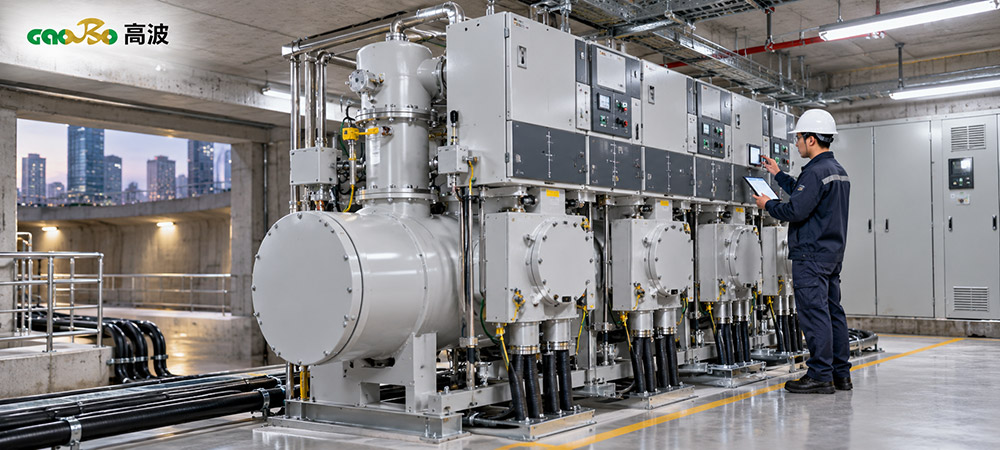
For EPC contractors, utilities, industrial users, data centers, renewable-energy developers, and infrastructure projects, understanding the differences between AIS and GIS can help determine which solution is better suited to the application.
GAOBO SWITCHGEAR MANUFACTURER provides customized medium-voltage and high-voltage switchgear solutions for industrial and commercial power projects, including metal-clad switchgear, ring main units, incoming cabinets, transformer feeder cabinets, and other project-specific electrical distribution equipment.
Air-Insulated Switchgear uses atmospheric air as the primary insulation medium between energized electrical components.
AIS is widely used in medium-voltage distribution systems because of its relatively simple structure, easier inspection, and competitive project cost.
Typical AIS equipment may include:
Metal-clad switchgear
Withdrawable circuit breaker cabinets
KYN28 switchgear
Incoming feeder panels
Transformer feeder panels
Bus coupler cabinets
Metering cabinets
Because air requires more physical clearance than gas insulation, AIS equipment normally requires more installation space.
However, the internal components are generally easier to access for inspection, maintenance, and replacement.
Gas-Insulated Switchgear uses an insulating gas inside a sealed enclosure to provide electrical insulation.
Compared with AIS, GIS can achieve a much more compact design because the insulating medium allows smaller clearances between electrical components.
GIS is commonly considered for locations where installation space is limited or where environmental conditions make sealed equipment desirable.
Applications may include:
Urban substations
Underground substations
Data centers
Rail transportation projects
Industrial facilities
Renewable-energy projects
High-density commercial developments
Compact ring main units are also commonly based on sealed insulation concepts.
One of the biggest differences between AIS and GIS is physical size.
AIS requires larger electrical clearances because air is used as the insulation medium.
GIS can significantly reduce equipment footprint, making it attractive for projects where electrical-room space is expensive or limited.
For example, urban substations, underground facilities, and large data centers may benefit from compact GIS designs.
On the other hand, factories or industrial sites with sufficient space may prefer AIS because of its simpler structure and easier maintenance access.
AIS generally has a lower initial equipment cost compared with GIS.
Its structure is more conventional, and the equipment can often be manufactured, installed, and maintained with standard procedures.
GIS usually requires more specialized manufacturing, sealing, testing, and installation processes.
However, buyers should not compare equipment price alone.
If GIS reduces building size, civil construction requirements, or land use, the total project cost may become more competitive.
Therefore, the correct comparison should include equipment, installation, building space, maintenance, and lifecycle cost.
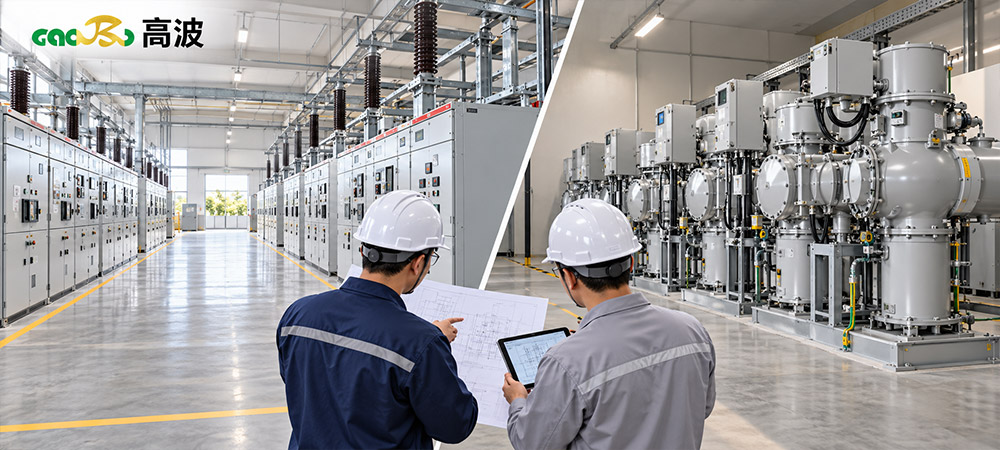
AIS equipment is relatively easy to inspect because components are more accessible.
Maintenance teams can visually inspect busbars, breakers, cable connections, and insulation conditions.
GIS uses sealed compartments, which can reduce exposure to dust, humidity, and contamination.
This may reduce routine cleaning requirements, but specialized procedures may be needed if internal maintenance becomes necessary.
Project owners should therefore consider the availability of trained personnel and long-term maintenance capability.
Operating environment is another important factor.
AIS may be affected more directly by:
Dust
Humidity
Salt
Pollution
Condensation
Industrial contamination
For clean indoor environments, this may not be a major issue.
GIS provides sealed insulation and can offer better protection against external environmental conditions.
This makes GIS suitable for coastal areas, polluted industrial environments, underground installations, and locations with high humidity.
Both AIS and GIS can provide reliable power distribution when correctly designed and maintained.
AIS offers clear compartmentalization and easier access for troubleshooting.
GIS provides a sealed environment that reduces exposure to external contaminants.
In critical applications, system design should also consider:
Protection relay coordination
Circuit breaker performance
Busbar segmentation
Earthing systems
Interlocking
Monitoring
Redundancy
The overall reliability depends not only on insulation technology but also on equipment quality, engineering, installation, and maintenance.
AIS is commonly selected for:
Industrial plants
Utility substations
Manufacturing facilities
Commercial buildings
Mining projects
Power distribution rooms
GIS is often preferred for:
Space-constrained substations
Urban projects
Underground installations
Data centers
Transportation projects
High-density infrastructure
Harsh environments
In some projects, AIS and GIS may even be used together in different parts of the same power network.
Project teams should evaluate the following factors before selecting a solution:
System voltage
Rated current
Short-circuit level
Available installation space
Environmental conditions
Initial budget
Maintenance capability
Required reliability
Future expansion
Local standards
Project lifecycle cost
If space is available and easy maintenance is a priority, AIS may be the more practical choice.
If space is limited or the environment is demanding, GIS may provide important advantages.
GAOBO SWITCHGEAR MANUFACTURER provides customized switchgear solutions based on project drawings and technical requirements.
GAOBO can support:
Medium-voltage metal-clad switchgear
KYN28 switchgear
Ring main units
Incoming and outgoing feeder cabinets
Transformer protection cabinets
Box-type substations
Low-voltage switchboards
Intelligent monitoring systems
Customization can include rated voltage, rated current, circuit breaker brands, protection relays, cabinet dimensions, communication systems, monitoring, cable entry, and IP protection requirements.
The key difference between Air-Insulated Switchgear and Gas-Insulated Switchgear lies in the insulation method, equipment footprint, investment cost, maintenance approach, and environmental suitability.
AIS offers easier access, simpler maintenance, and competitive cost, while GIS provides compact installation and better protection from harsh environmental conditions.
The best choice depends on the actual project rather than one technology being universally better.
GAOBO SWITCHGEAR MANUFACTURER can help customers evaluate project requirements and develop customized medium-voltage and high-voltage power distribution solutions for industrial, commercial, infrastructure, and renewable-energy applications.
AIS uses air as the primary insulation medium, while GIS uses insulating gas inside a sealed enclosure. GIS is generally more compact, while AIS is typically easier to inspect and maintain.
AIS usually has a lower initial equipment cost. GIS may have a higher purchase cost but can reduce required building space and land use, so total project cost should be evaluated.
GIS can be advantageous in humid, dusty, coastal, polluted, or underground environments because the primary electrical components are enclosed within sealed compartments.
Yes. AIS is widely used in factories, substations, commercial buildings, mining facilities, and industrial power-distribution systems where adequate installation space is available.
Yes. GAOBO SWITCHGEAR MANUFACTURER can provide customized metal-clad AIS switchgear, KYN28 cabinets, ring main units, and other medium-voltage distribution solutions according to project requirements.