High Voltage&Low Voltage Switchgear Cabinets Manufacturing Company. more than 17 years design and RD experience.


-
Leave a Message : qiuwenjie@gaoboele.com
-
Phone : +86 -17329948916

Leave a Message : qiuwenjie@gaoboele.com
Phone : +86 -17329948916

Selecting the correct switchgear voltage level is one of the most important decisions in an industrial power distribution project. 11kV, 22kV, and 33kV switchgear may all be used for medium-voltage applications, but they serve different network capacities, transmission distances, load requirements, and utility connection conditions.
For EPC contractors, electrical engineers, project owners, and procurement teams, the right choice should not be based on voltage alone. Total connected load, transformer capacity, short-circuit level, cable distance, future expansion, local utility standards, equipment cost, and maintenance requirements must all be considered.
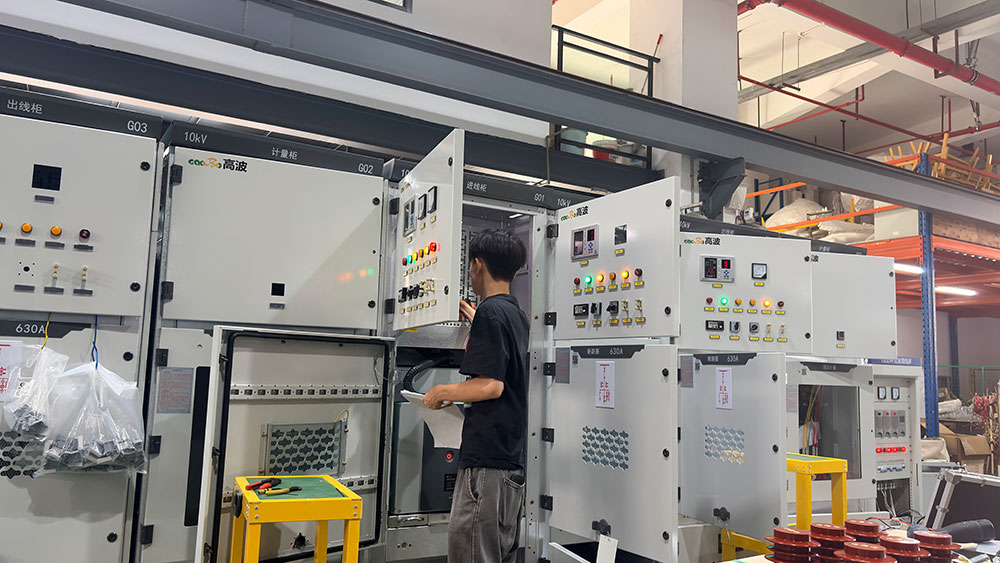
GAOBO SWITCHGEAR MANUFACTURER provides customized medium-voltage switchgear solutions covering 11kV, 22kV, 33kV and up to 40.5kV-class applications for industrial plants, substations, renewable-energy projects, mining facilities, data centers, and infrastructure systems.
11kV is widely used for industrial and commercial medium-voltage distribution.
It is often suitable when electricity is received from a local utility and distributed through transformers to low-voltage loads such as machinery, motors, HVAC systems, production lines, and building services.
Typical 11kV applications include:
11kV systems can provide a practical balance between equipment cost, installation complexity, and power capacity.
GAOBO can configure 11kV switchgear with vacuum circuit breakers, protection relays, metering, busbars, mechanical interlocking, and communication functions according to the project single-line diagram.
22kV distribution is commonly selected when a project requires higher capacity or longer power-distribution distances than a typical 11kV system.
Because higher voltage allows the same amount of power to be transferred at lower current, cable losses and conductor requirements can often be reduced.
22kV switchgear may be suitable for:
For projects with distributed transformers across a large site, 22kV can provide an efficient way to move power between substations and load centers.
However, the final voltage level should always match the utility connection and local network design.
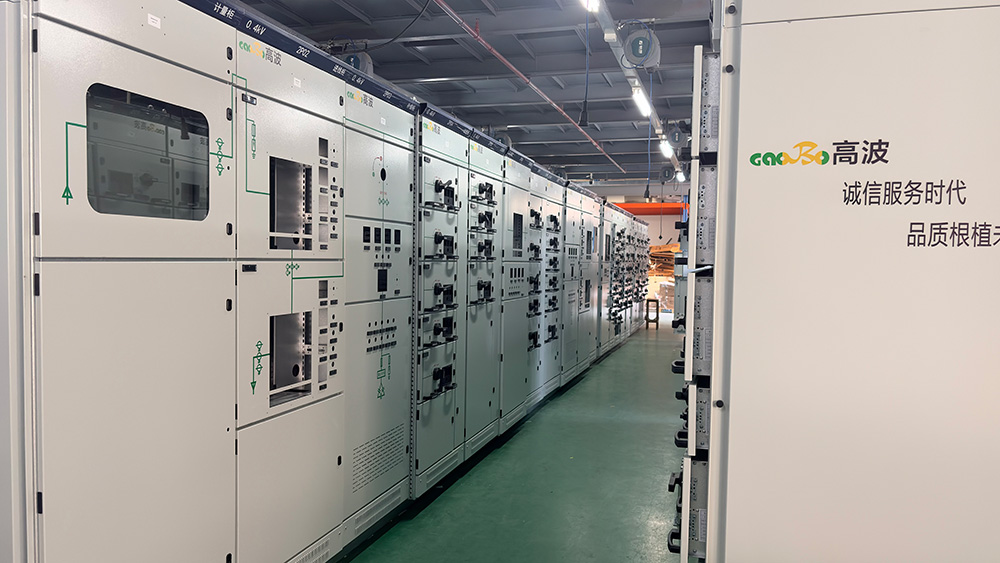
33kV systems are generally used for higher-capacity distribution and projects where electricity must be transmitted across larger sites or from utility substations to major industrial loads.
Common applications include:
A 33kV system can reduce current compared with an 11kV system supplying the same power level.
This may allow engineers to optimize cable sizes and reduce voltage drop over longer distances.
However, 33kV equipment generally requires greater insulation clearance, suitable circuit breakers, more demanding protection coordination, and appropriately designed switchgear rooms.
One of the first questions when choosing between 11kV, 22kV, and 33kV should be:
How much power must be distributed, and how far must it travel?
For moderate loads and relatively compact sites, 11kV may be sufficient.
As project capacity and distribution distance increase, 22kV or 33kV may become more attractive because higher voltage reduces the current required for the same power transfer.
Lower current can reduce cable losses and voltage drop, but the higher-voltage switchgear and associated infrastructure may have higher initial costs.
The best solution should therefore balance capital cost with long-term operating efficiency.
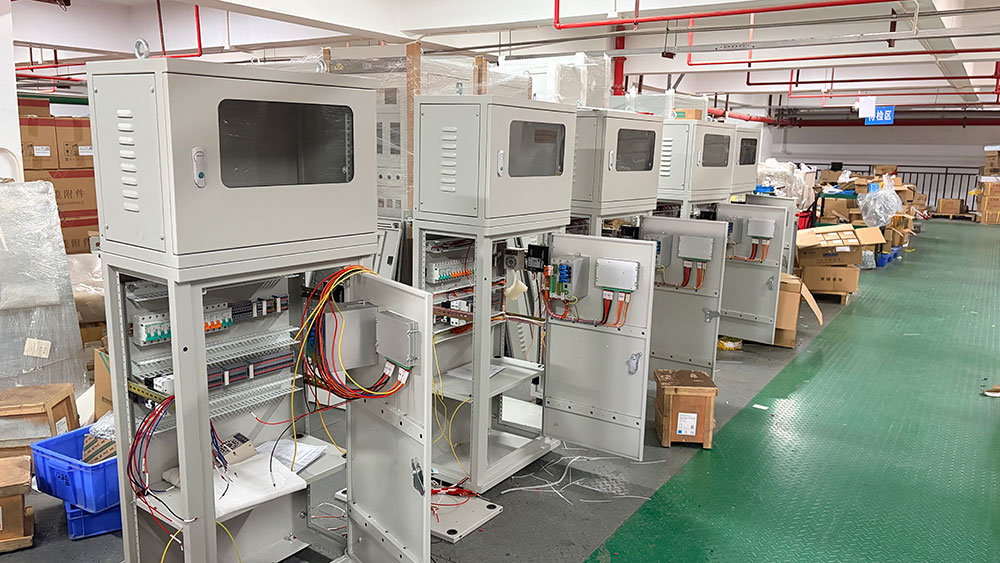
Local utility requirements often determine the available connection voltage.
Before selecting switchgear, project teams should confirm:
For example, if the utility supplies the project at 33kV, the main incoming switchgear must be compatible with that network even if the internal plant distribution later operates at 11kV.
Some large projects may therefore use several voltage levels within the same electrical system.
Higher project capacity can increase fault-current levels.
Switchgear must therefore be selected according to both rated voltage and short-circuit performance.
Important parameters include:
Protection coordination between incoming feeders, transformers, bus sections, and outgoing circuits should also be reviewed during engineering.
A power system designed only for today's load may become difficult or expensive to expand later.
Industrial facilities, data centers, renewable-energy projects, and commercial developments often increase their electricity demand after the first construction phase.
When evaluating 11kV, 22kV, or 33kV, project owners should consider future transformer additions, extra feeders, production expansion, and new buildings.
In some projects, choosing a higher distribution voltage at the beginning may provide additional capacity for future development.
GAOBO SWITCHGEAR MANUFACTURER can develop medium-voltage switchgear according to project specifications and single-line diagrams.
Customization can include:
GAOBO’s product portfolio includes medium-voltage metal-clad switchgear, KYN28 solutions, ring main units, incoming cabinets, transformer feeders, bus couplers, and box-type substations.
There is no single voltage level that is suitable for every medium-voltage project.
11kV switchgear is often practical for general industrial and commercial distribution. 22kV switchgear can provide additional capacity and efficiency for larger sites, while 33kV switchgear is commonly considered for higher-power projects and longer distribution distances.
The correct selection should be based on load demand, utility voltage, cable distance, short-circuit requirements, future expansion, project standards, and total lifecycle cost.
GAOBO SWITCHGEAR MANUFACTURER provides customized medium-voltage solutions to help international customers develop safe, reliable, and efficient power distribution systems.
The primary difference is rated system voltage. Higher voltage can transfer the same power with lower current, which may reduce cable losses and voltage drop. Equipment insulation, protection, circuit breakers, and installation requirements also differ.
Yes. 11kV is widely used in manufacturing plants, commercial facilities, water projects, data centers, and industrial distribution systems, depending on the total load and utility supply.
33kV may be more suitable for large loads, long distribution distances, large industrial sites, renewable-energy plants, mining projects, or when the utility connection is provided at 33kV.
Yes. For example, a project may receive utility power at 33kV, transform it to 11kV for internal distribution, and then step it down again to 400V for final low-voltage loads.
Yes. GAOBO SWITCHGEAR MANUFACTURER can customize medium-voltage switchgear according to rated voltage, current, short-circuit capacity, breaker brands, protection relays, cabinet layout, communication requirements, and project drawings.